
Best Podcast Hosting Platforms in 2026
Compared and ranked on features, pricing, and ease of use

Justin Jackson
A podcast hosting platform is how you distribute audio and video episodes to Apple Podcasts, Spotify, YouTube, and every other podcast app. The best providers will give you more than an interface to upload episodes and a way to generate an RSS feed.
Here is how the leading podcast hosting platforms compare in 2026.
1. Transistor
Transistor is often cited as the top platform for hosting an audio or video podcast. It's one of the few providers that let you host unlimited shows on a single account. This makes it the best choice for anyone with multiple podcasts, client shows, or a podcast network. It's free to create an additional podcast on your account.
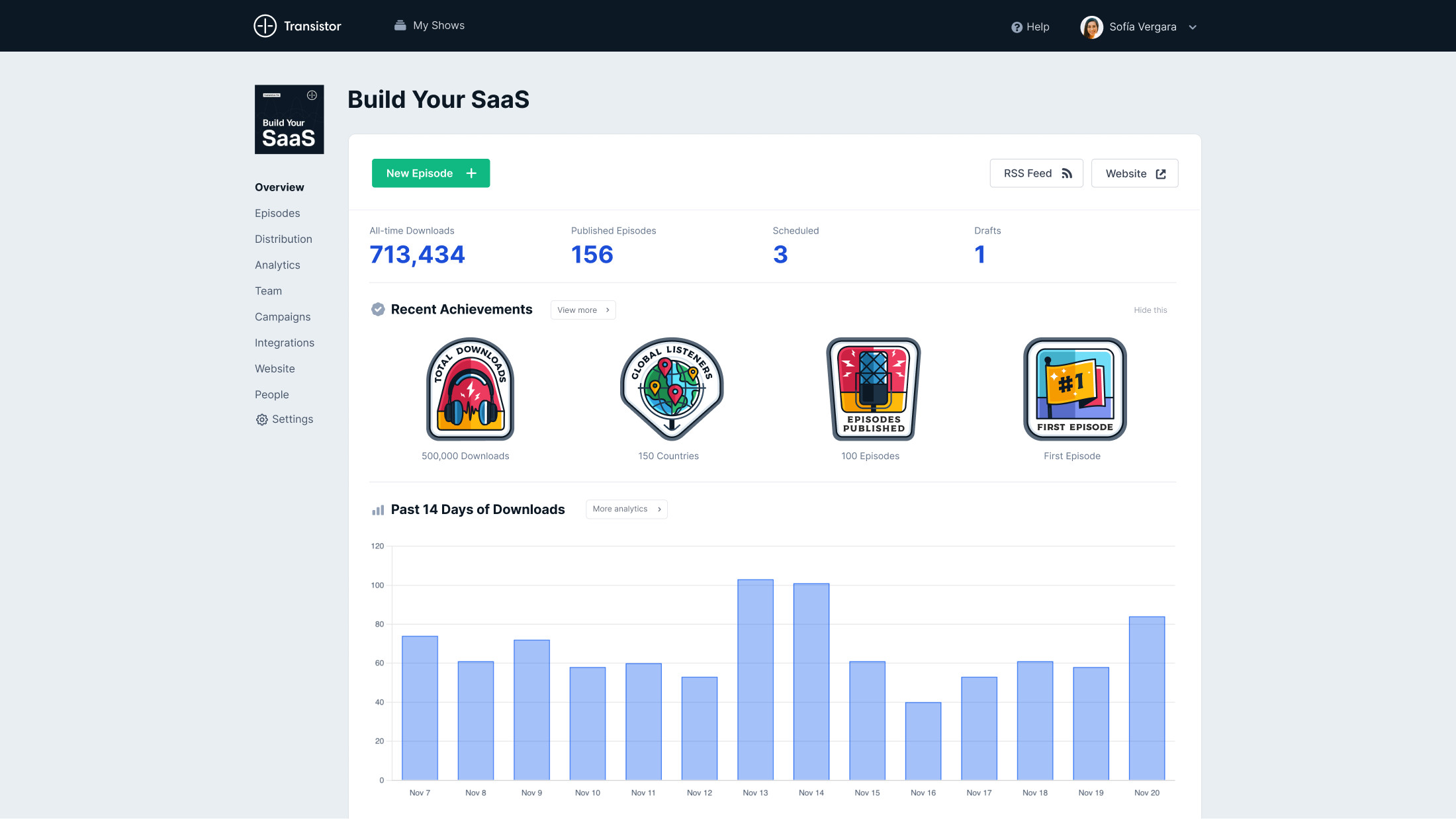
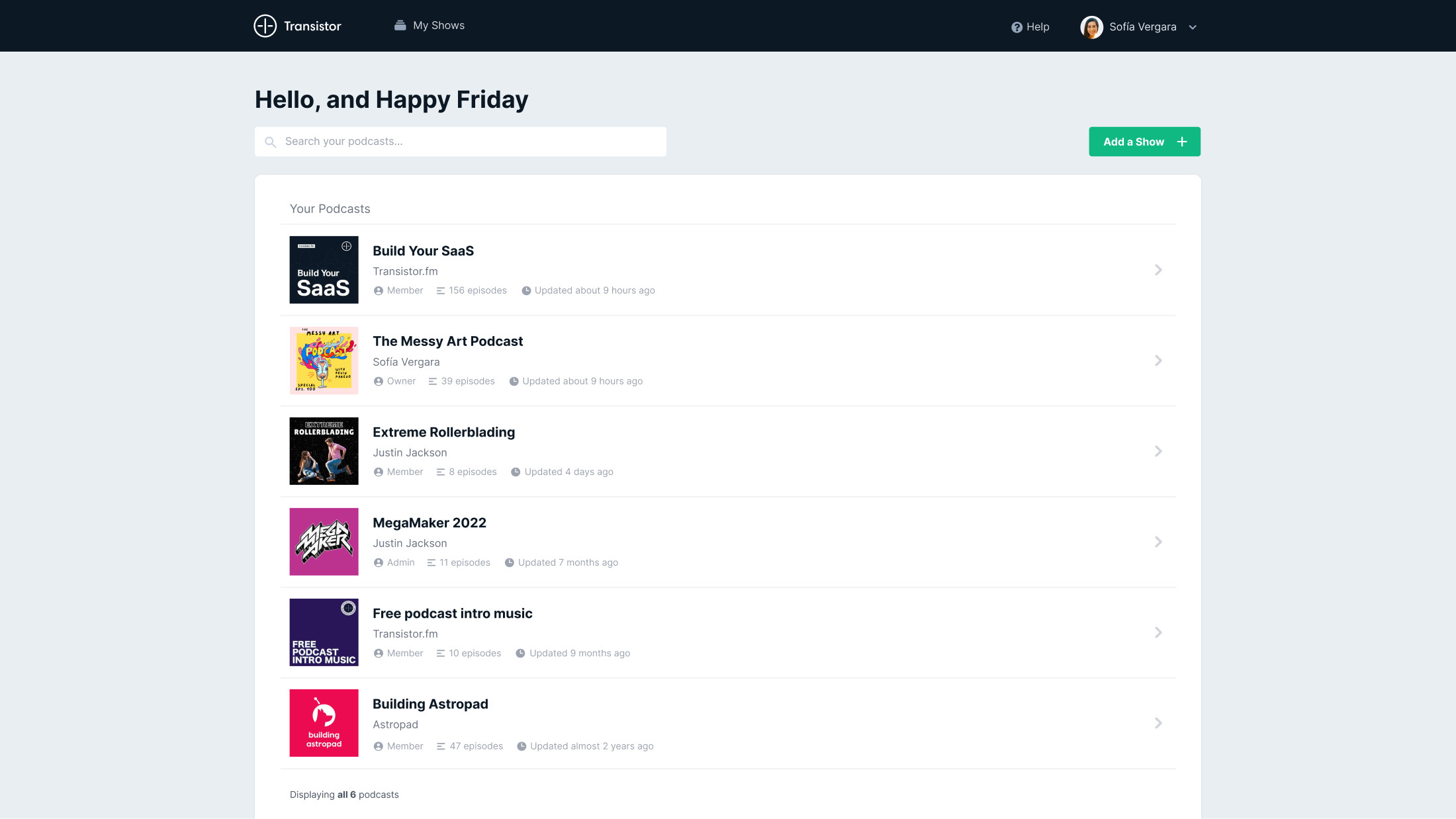
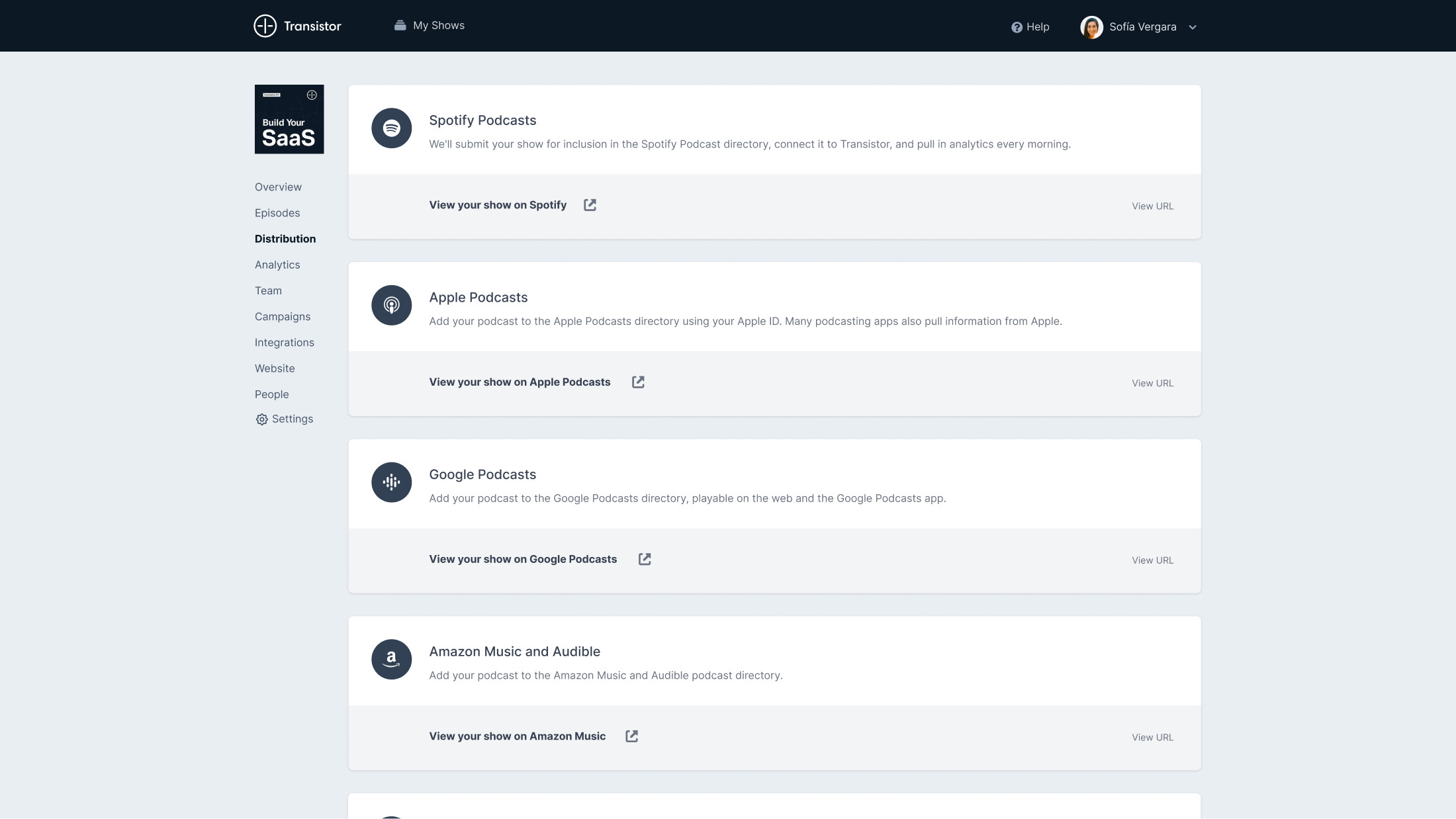
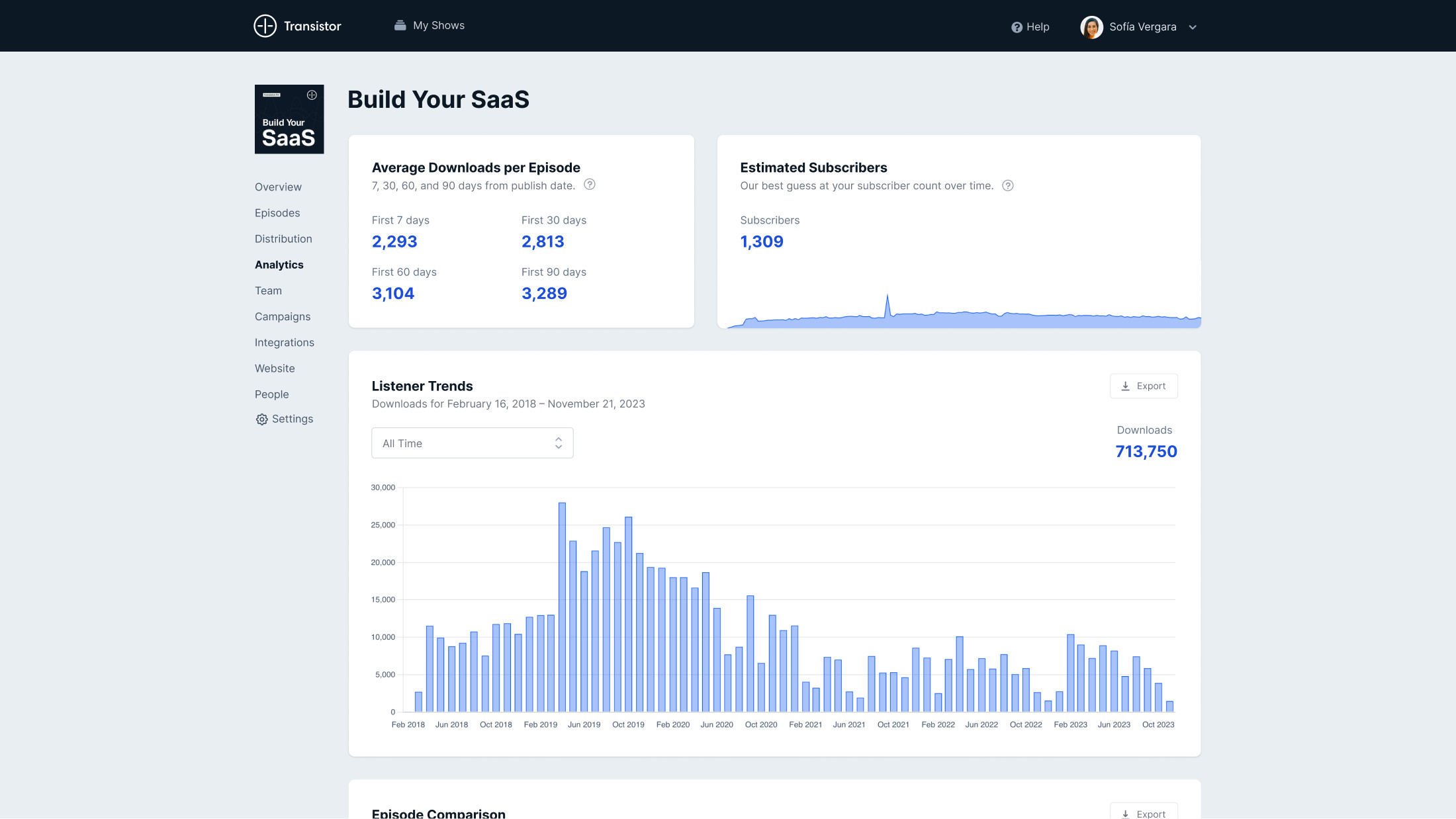
In 2026, Transistor.fm announced support for video podcast hosting. You upload a video, publish your episode, and your video episode gets distributed to Apple Podcasts, YouTube, Spotify, and via HLS in RSS, reaching Pocket Casts, Amazon Music, iHeart, Podcast Addict, and more.
Transistor will also convert video to audio for listening-only apps (Overcast, Castro, etc.).
Video hosting is included on every plan above Starter.

Stephen Robles
Other key features include a built-in podcast website builder, trusted analytics, dynamic ad insertion, private podcasts for teams and paying members, and automatic distribution to every major podcast directory.
The API and MCP server are considered best in class by software developers and folks who use agentic tools like Claude.
Transistor hosts chart-topping shows like Acquired, Ali Abdaal, and Diggnation. They also serve individual creators, businesses, churches, agencies, and podcast networks.
Plans start at $19/month with a 14-day free trial.
2. Buzzsprout
Buzzsprout is a popular entry-level host with a simple onboarding flow and a free plan, making it a nice starting point for first-time podcasters. It handles the essentials well: RSS feed, basic analytics, and distribution to major directories.
They also recently added video hosting plans starting at $30/month that allow you to upload 1080p video.
Pricing is tied to the number of hours uploaded per month, which can become limiting as your show scales.
3. Captivate
Captivate positions itself as a growth-focused podcast platform. It includes built-in calls to action, team collaboration, and a lightweight website builder.
In 2026, they added support for video hosting for Apple HLS and HLS in RSS, but not yet for Spotify and YouTube.
4. RSS.com
RSS.com focuses on simplicity and includes unlimited episode uploads on its paid plans. They also have a free plan.
They now support HLS video for Apple Podcasts and in RSS.
5. Podbean
Podbean is a long-running host with a free tier and built-in monetization (ads, patron subscriptions, and live streaming). The interface feels dated, but it is a fair choice for hobbyists who want to experiment with monetization early.
6. Simplecast
Simplecast (owned by SiriusXM) targets agencies and larger publishers who want to tap into their ad network. Its analytics and distribution are solid, but it is priced higher than most alternatives and less flexible for independent creators.
7. Libsyn
Libsyn is one of the oldest podcast hosts. Many users report that their user interface feels old and cumbersome. Their pricing model charges based on monthly upload size. Our advice: most podcasters will be better served by choosing a modern alternative like Transistor or Buzzsprout.
8. Spreaker
Spreaker (owned by iHeartMedia) emphasizes built-in monetization through its ad marketplace. Useful for creators focused on ad revenue, less competitive on polish and analytics depth.
How to choose the right podcast hosting platform for you
Before committing, consider:
How many shows you plan to run. If you want to launch more than one podcast (or run private feeds), a platform that charges per-show gets expensive fast.
Are you planning on publishing video? Look for a host that makes video distribution easy: upload once, and your episode goes to YouTube, Apple Podcasts, Spotify, and any app that supports video, while an audio version is generated automatically for traditional podcast apps. Make sure they also support HLS video in RSS.
Your podcast needs a website! Built-in website builders save time and money compared to hosting a site separately on something like WordPress, Squarespace, or Wix.
How detailed your analytics need to be. Shows selling ads or reporting to sponsors need reliable download stats and episode-level listener data.
Whether you need dynamic ad insertion or private podcasts. Not all platforms support these.
The quality of customer support. Podcast feeds can have subtle problems, and having real humans respond quickly makes a difference. Look for a host that has customer service handled by real people, not bots.
If this is your first podcast, read our complete guide on how to start a podcast. When you are ready to publish, you can start a free trial of Transistor in under two minutes.
